The word “strategy” did not originally come from business. Its roots are military. In fact, the widespread use of “strategy” in a business context only seems to have emerged in the 1960s. Before that, it referred almost exclusively to warfare. The Greek root of the word relates to generalship and battlefield leadership.
Wikipedia offers a good summary of strategic thinking, drawing on military theorists like Carl von Clausewitz and B.H. Liddell Hart. Stripped down, the idea is simple: strategy is the use of all available and appropriate resources to achieve political—or, in our case, organizational—objectives.
Sun Tzu famously said in The Art of War:
“If you know yourself and you know your enemy, you will not lose one fight in a hundred.”
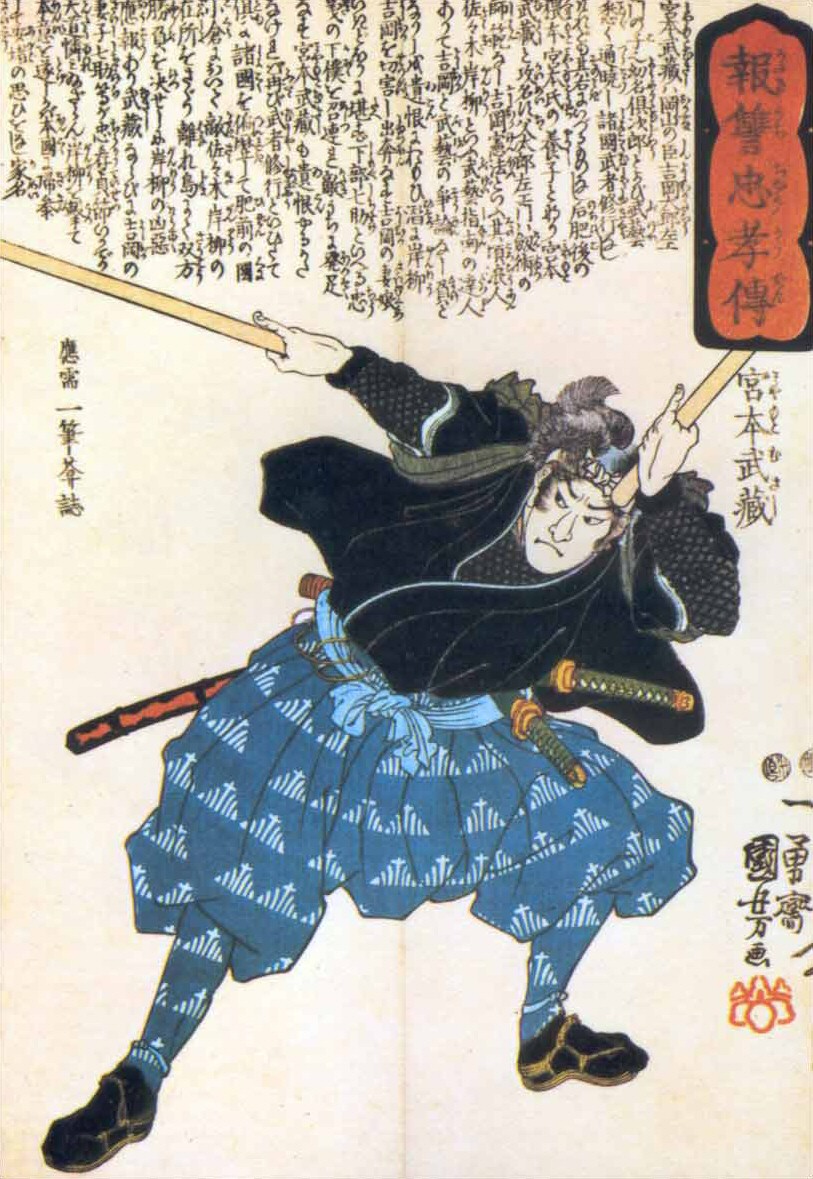
I personally find Miyamoto Musashi’s Book of Five Rings even more instructive, particularly for business. In the Earth Scroll, Musashi discusses strategy at length, including its application to commerce—remarkably, in the 16th century.
“In the way of business, there are cadences for making a fortune and cadences for losing it. In each way, there exist different cadences. You must discern well the cadences in conformity with which things prosper and those in conformity with which things decline.”
This idea of cadence is critical. The CFO sits at the center of the organization as cash is converted into reporting and analysis. That position gives you a foundation for understanding the rhythm of the business. But numbers lag reality. Recognizing patterns early usually requires looking outward—to Sales, Purchasing, Operations, and the market itself. Being strategic is not about owning multiple functions; it is about understanding the rhythm of the business and knowing when to act.
Musashi outlines nine principles for practicing strategy:
- Think of that which is not evil.
- Train in the way.
- Take an interest in all the arts.
- Know the way of all professions.
- Understand advantages and disadvantages.
- Learn to judge quality.
- Perceive what is not visible on the surface.
- Be attentive to even small things.
- Do not perform useless acts.
Much of this applies directly to leadership. Do not cross legal or moral lines—doing so can derail an entire organization and your own career. Avoid useless busywork. Focus on actions that actually create value. Learn broadly, not just within your own discipline.
Musashi also emphasizes people and leadership at scale:
“In grand strategy, you must be victorious through the quality of the people you employ, through how you utilize them, through ruling correctly, and through applying the law of the world in the best way.”
Individual skill matters, but victory at scale requires leveraging others. This applies directly to the CFO role. Your job is not to win every fight yourself, but to enable the organization to win.
He reinforces this idea repeatedly:
“It is necessary to know ten thousand things by knowing one well.”
And:
“You should not have a predilection for certain weapons.”
In business terms, this means not relying on a single tool or framework. CFOs often try to win purely with numbers. Sometimes that works. Sometimes it doesn’t. Even if you dislike leverage, borrowing may be the right decision. Strategy requires adaptability, not ideology.
Musashi is also very clear about the ultimate purpose of strategy: to win.
“The true Way of strategy is to fight and win.”
In business, winning does not always mean aggressive expansion. Sometimes winning is surviving a down cycle. Sometimes it means conserving resources until the cadence shifts. But consistently winning requires deliberate strategy and execution. Not losing is not the same as winning.
If you want to be a strategic CFO, you must help your company win. There are no shortcuts. Finance tools alone are rarely sufficient. A strategic CFO understands how to marshal internal capabilities and leverage external resources when it matters most.
As for how to become that kind of CFO, I’ll admit I don’t have a perfect formula. I’ve been fortunate to work at companies that grew and succeeded, but I still see myself as being on the path rather than having arrived.
Musashi’s advice resonates here:
“Temper yourself with one thousand days of practice, and refine yourself with ten thousand days of training.”
When you are not executing, you should be practicing—developing skills, developing people, debating scenarios, and rehearsing decisions. When the moment comes, you will act faster and with more confidence if you have already thought through the possibilities.
This post is only a broad overview of strategy and how it applies to the CFO role. In future posts, I plan to go deeper into specific actions and real-world examples from my career. I’ll also return to Musashi from time to time—both as a strategist and, for those interested, as a sword fighter.
Strategy, at its core, is about winning. A strategic CFO understands the cadence of the business, knows when and how to act, and helps the organization use all of its available tools to prevail.
That, in my view, is what the title should actually mean.
The Five Rings: Miyamoto Musashi’s Art of Strategy
Above is an Amazon link to a translation of The Book of Five Rings.
Discover more from Being a CFO and other topics
Subscribe to get the latest posts sent to your email.