
Not just finance, hobbies too ....

Author: Michael Page 7 of 9

https://www.linkedin.com/in/michael-potter-2689a94

Public company CFO.

Born in Montreal and currently living in the greater San Francisco area.

Board Games – New types of fun

I was the president of my high school and my college’s war gaming clubs. So it should be no surprise that I like board games, and the fact that I play D&D and Magic the Gathering as well makes this extend to table top games in general.

There was a time in the 80’s and into the 90’s that it was thought that board games were a dying breed. Sales stagnated and went down and video games seemed to be the replacement. There were not that many new games sold in the USA and the old standbys like Monopoly, Clue and Life were rarely played. Even games like Risk which are more involved than many other games only had a basic level of popularity. All the popular games relied on dice and being random.

In fact, while the then mainstream games were dying out, other games were growing in the background. Dungeons and Dragons is a good example. It started out in a small crowd that liked miniature war games and then hit critical mass and started be played all over the country. Magic the Gathering was release in 1993 and was an immediate hit and has grown in popularity every year since. My war gaming interest introduced me to Diplomacy which I still think is one of the best games I ever played and probably has the most total hours of game play for me in a board game (D&D and MtG best it but are not board games).

Diplomacy was actually a template for the games that would come over to the USA and restart board game playing. They are generally called Euro games or German games. These games tended to have a few distinct features, and one of these was that they did not use dice to control movement or to resolve a game element. They were not a random chase across a board. They also tended to be symmetrical in that each player started off with the same resources. A lot of the games were around gathering resources and building something, not a direct competition to attack and take out the other player. Chess is a good example of the symmetrical start and the non-random game except it is much more combative than the wave of games that came from Europe. These games were competitive, but you generally were not attacking the other player.

One example is Settlers of Catan (which is now just called Catan). This a very typical “German” game right down to as little as possible text on the board or the cards being used in order to increase international appeal. The game uses tiles which are either randomly drawn and placed or placed in a specific manner to make the game as fair as possible for all players. The quality of the components is high compared to the usual American family board game. The rules are simple enough, but allow for deep strategy. The game is a resource gathering and building game, and you can target other players (move the robber to get them) but it also allows for trading between players which rewards social interaction. Last time I played, my 13 year old daughter won the game.

Similar games in component quality and abstraction moved over from Europe to the USA (Puerto Rico and Ticket to Ride are two other examples) and interest in board games grew. The Internet made it easier to discuss the games with other players (www.boardgamegeeks.com is a famous and popular site for this). New designers in the USA and Europe still faced pretty large obstacles in getting a game out. The developer either had to front the large cost of ordering the initial games to be sold, or they had to interest a game company with no past sales to attract them. That problem has recently been solved by crowd funding sites like Kickstarter.com. As crowd funding grew more acceptable and popular, designers could launch a campaign online and raise the funds needed to do the first printing.

Arcadia Quest

Kickstarter not only helped many new Euro Games get started, it also helped to fund a whole new generation of card and miniature based games. I recently started buying games there starting with a superhero card game called Emergents Genesis and I have since bought several others. Also, companies like Fantasy Flight games published quite a few hits without using Kickstarter like Arkham Horror (Call of Cthulhu based) and Star Wars: X-Wing (a miniatures based space combat game using the ships from the Star Wars movies). Game sales grew and grew over the last 10 years and it is now a popular pastime again.

The availability of better and more interesting games is good, and Kickstarter and similar sites are helping fund new games, but it still does not solve the one basic issue of playing board games. – you need a few people to all be available at the same time and place. There are two solutions to that problem plus other options as well. If you play a very established game like Magic the Gathering, it is pretty easy to find a specialty store that will have players plus Wizards of the Coast has an organized play network including a professional tour. MtG is worthy of a blog in and of itself, and I will do one soon.

Cthulhu Wars Game Pieces

Very often the same stores that sell MtG and offer play space for it also sell and offer play space for board games. One other increasingly popular option is board game café’s which are coffee shops built around offering play space for games (including supplying compiles of some games) and building a group of players that love games and are there to play. One final option is www.meetup.com which very often has groups of board game enthusiasts who meet several times a month at different public places.

These type of meet-ups are good for someone who travels a lot to strange cities and has lots of nights alone. It is a good way to meet locals and get some games in against new opponents. Maybe even get to play some new games. I have stopped in local stores to play MtG for years when traveling on business and I plan on starting to stop by some board game cafes in the near future.

Arcadia Quest

I’ll list some different games at the bottom of this blog in case you are curious After reading about it. I will be doing game reviews as well like I have been doing book reviews and I have a large stack of games I will be playing through. One thing that is very different from the old games I played are the quality of the components today. The Cthulhu Wars game has detailed game pieces larger than an average banana and the Arcadia Quest figures are also very detailed and in a fun style. Pandemic is a fully cooperative game where the players try to beat the game, not each other and everyone wins or no one wins. If you want a social gathering game that is quick to learn and play, the card game Fluxx where the rules are constantly changing is quite good.
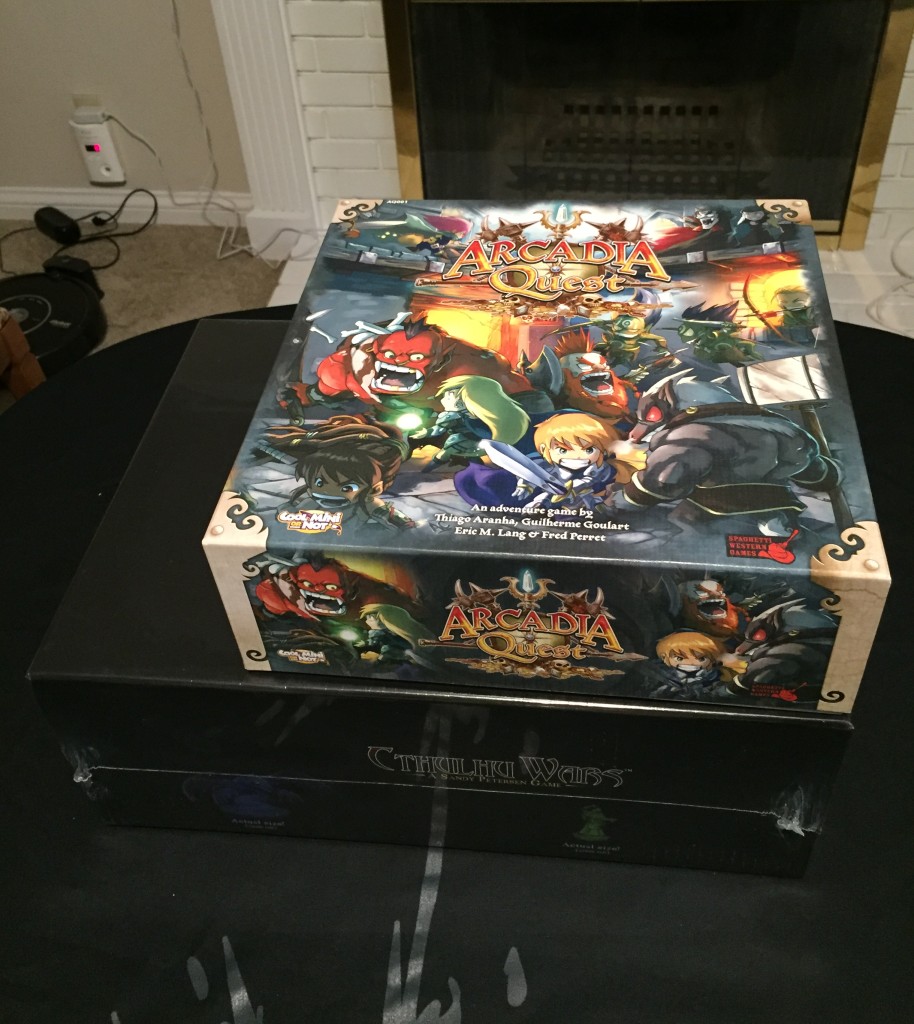
Arcadia Quest and Cthulhu Wars

Enjoy the pictures and I even did an unboxing video for Cthulhu Wars. I will try and figure out how to get it onto YouKu so that readers in China can see it.

Games I recommend

Catan 5th Edition

This is a classic example of a Euro or German Game

Cthulhu Wars

This game is a big commitment in terms of cost, but the playing pieces are amazing and the game play is very deep.

Emergents – Genesis SW

This is the deck building game that got me into Kickstarter. A friend helped to design it and market it. Not a video game even though that is the category.

Arcadia Quest Board Game

A fun RPG game in board game form. Nice game pieces.

Fluxx 5.0 Card Game

Card game where the rules are constantly changing

Pandemic Board Game

Cooperative game – you all win or you all lose.

Star Wars: The Force Awakens X-Wing Miniatures Game Core Set

Play out the small ship space battles from the movies (many expansions)

Diplomacy

Strategy game where the art of a well timed backstab is key to victory

Ticket To Ride

Another classic Euro game

Investor Conferences

A pretty standard press release from most public companies is an announcement that their executives will be attending a conference sponsored by a bank where they will be meeting investors. I’ll try and use this blog entry to describe what goes on at a typical conference and how to get your company invited to one. Unfortunately, these conferences tend to be invite only for the investors and they invite professional investors that manage money for mutual or hedge funds for the most part. There are conferences to meet angel investors or other forms of venture capital, but that is not what I’ll discuss here. Some conferences invite some private companies as well, but usually the presenting companies are all public companies.

You normally will want to go to a conference because it is a chance to directly talk to existing or potential investors. Almost every single potential investor will have evaluating management as one of their investment criteria and meeting in person is important. A non-deal roadshow is typically better because you meet more portfolio managers or other top decision makers, but conferences are an efficient way to meet many different investors all on the same day.

The first thing you need to do is get your company invited to the conference. These are run by the research division of the bank and legally they are separate from the investment bank services. So the banker you may have a relationship with can ask that you get invited but there is no guarantee (it almost always will be honored). If you are covered by the research group, you will almost automatically get invited to their relevant conferences. One service they offer to their customers is access to management and the conferences they run are very important to their marketing.

As coverage on your company grows, the number of invites to conferences also will grow. You will get invitations by banks that do not cover you. At a certain point, you will start to have to make choices about which conferences you will attend because you will get invited to more than makes sense, but that is a good problem to have. I tend to focus on and choose conferences held by the banks that cover my company to try and repay the resources they are spending on us, but you may also be building a relationship with a bank in the hope of getting coverage so that is just a rule of thumb.

Once you are invited, you need meetings. Normally, these are arranged by the sales force, sometimes with your analyst pushing. The investors that are attending have the list of attending companies and they normally request the companies they are most interested in. I generally try and be as efficient as possible and only sign up for one day if there are multiple days available. If demand is high, then you end up with some meetings of smaller investors that are 2 on 1 or 3 on 1. If demand is very high, the bank will ask for another day.

Conferences are a good opportunity for you to bring other staff along to learn something about investor relations. If your Controller has a goal to be more involved in IR, a conference can be good training. Since you are not doing a deal and because the meetings are a little more controlled and private, a conference is a good place to do some training and allow more staff to answer some questions. For local conferences, I have brought along the staff analyst who helped prepare the presentation. It is a good opportunity for them to see what questions you are asked and helps for the next version of your IR presentation.

I always try and have at least one other friendly person in the room with me. I do this for two reasons. The first is so that you have someone to help by giving you a break and answering a few questions or who can handle logistics like the presentation slot prep work. Although I have not actually had this happen, it is defensive as well. In case there is any doubt what was said in the meetings, you have another witness with you.

Conferences typically have two different ways of talking to investors. The first in private meetings, usually in one of the hotel rooms. They remove the bed and replace it with a small table and chairs. Most of your day will be sitting in that hotel room at the table talking. In a conference with normal demand, you will be answering questions from 8 AM to about 6 PM with the investors changing every 30 to 45 minutes. When I first started, it used to be common for management and investors to be constantly changing rooms and often dashing from floor to floor, but now the organizers tend to keep the companies in one room and the investors rotate.

I cannot emphasize it enough that you need to be prepared to be talking pretty much non-stop the entire day. Some meetings with just be you reviewing your standard presentation. Usually that is for investors that do not know your company or your sector very well. It can be a little frustrating to realize that you have potential investors in front of you that know little to nothing about you. You would think that they would do so,e homework before getting in front of a senior executive or that the covering analyst would have prepared them. However, many analysts use conferences to develop new ideas on companies or areas that they may become more interested in. Quite often they do not know your covering analyst as they have not really started to do any work yet. They have not done a lot of research on you yet either because they have not decided if you are worth it. So this initial meeting is your chance to make a good first impression. Of course, some people just randomly take a meeting to fill up their day and really should have done more work in advance, but you do want to talk to potential new investors so a few meetings like that can be good.

The other style of private meeting is just questions and answer. You never quite know what questions you’ll be asked and exactly what the topic will be. Time passes a lot quicker because you’re answering questions instead of doing your prepared pitch (which can get dry and boring if you do it often enough). You need to be careful when you answer questions because reg FD is in full effect – you cannot reveal any material, non-public information. You need to be particularly careful about guidance. You cannot reiterate guidance or change guidance. The SEC views both as new material, non-public information. Any past guidance needs to be treated as a historical fact, and you cannot express a current opinion on it.

The whole private meetings content is somewhat ironic. You are not supposed to reveal anything new that is material. You can give out some explanatory color around your public statements, but you need to be extra careful about what you say. That means in your scheduled meetings and in social events at the conference. Essentially the meetings should be about assessing management and filling in tiny holes in the public disclosure.

As an aside, it is not uncommon that someone does not show up for one of your meetings. Things happen and plans sometimes get changed. Let the event organizers know and ignore it. If there are a lot of cancellations maybe the demand was not too high and the sales staff tried to stuff a few meetings in but their clients changed their minds. Nothing you can do about it at the conference, so don’t let that effect your other meetings.

The other event that usually happens is some form of presentation. This is either you doing you pre made presentation or some form of fireside chat or panel in which the covering analyst asks you questions. If the conference offers the opportunity to webcast these, then take it. Each person at your individual meetings probably invests an order of magnitude more than any retail investor, but your retail investors are usually the largest investor, in aggregate. They are usually starved of any direct contact with management and the earnings call and anything you webcast from conferences is the only chance they will have to hear you speak.

No matter what, whether in one-on-one meetings or in the presentation, you need to have your key talking points decided before the conference even begins. Like a politician, not matter what the questions are, make sure that you deliver your message. This is an absolutely key feature of the conference. It is a chance to hammer home a specific message over and over.

When you are done, you might be thinking if what you just did will impact the stock price. There might actually be a big move around a conference but that is normally caused by groupthink of all the investors there. They tend to know each other and talk. If there is a good and positive vibe that comes from the conference they get excited. If they pick up a lot of negative body language from a lot of management teams they may get down on your sector or the market as a whole. Otherwise, as a general rule, you are talking to an analyst at the investor fund and they need to get back to the office and do a report to their boss, the portfolio manager. If they like you and convince their boss to invest it might be a week or two before any decision is made. If there is an immediate move in your stock at a conference you need to consider if you have out material non-public information.  If you did, involve your lawyer right away and there is a good chance that you need to put out a press release.

The final advice I would give is that other covering analysts often ask you to meet with their clients while you are in town, or even do an NDR and you should say no. As a general rule, it is considered to be impolite to book client facing activities around the conference. So meeting with the analyst themselves is ok, but if you do client meetings you will distract attention from the conference you are at. So unless there is a very compelling reason, politely decline client meetings except at the conference.

(picture taken at Dana Point, CA at the one conference a year with that type of scenery)

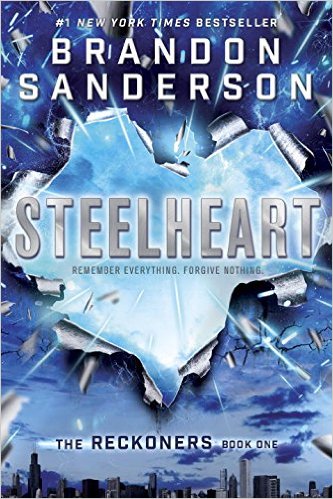
Book review – Brandon Sanderson’s the Reckoners

As always on my Sunday review, these are books I recommend if you are about to go on a trip and are at the airport want to download something to read. I have tried to pick books that are entertaining and will help to pass the time, and all are books I have read myself.

This week, I am doing a mini-review of the Reckoners trilogy by Brandon Sanderson. These books are actually targeted at the young adult (YA) market, but the story and characters are interesting enough that I think that the YA target doesn’t detract from their appeal. Just be prepared for no swearing and where the lead character kissing one of the woman characters is a very big deal. At least if you like these books you can pass them onto your kids and not be concerned about what is in the books.

I actually prefer his Mistborn/Well of Ascension series more, but the Reckoners is less involved and very entertaining to read. The series is set in an alternate version of our world where an unexplained explosion in the sky which came to be called Calamity gave some people super powers. These people are called Epics. Unfortunately, using the superpowers causes emotional changes and a form of madness where they become amoral tyrants.

David Charleston, the main character, sees his dad shot down in front of him in a bank by a very powerful epic called Steelheart. The explosion in space that created the Epics happened when he was 6 years old and his father was killed when he was 8. Steelheart is one of the most powerful Epics (a High Epic) and rules Chicago. He is able to transmute other materials to steel and he is invulnerable. Most of the top Epics are immune to any regular way to kill them. All Epics have a vulnerability that shuts down their powers. The story really starts with David as a teenager burning with the desire to get his revenge on Steelheart. A shadowy group called The Reckonors hunts and kills Epics and David forces them to let them join them because he knows a secret about Steelheart. When his father was killed, David saw Steelheart bleed.

That is the basic set-up. The world is a dystopia with the calamity explosion causing a permanent twilight and with the super powered Epics being tyrants all over the world with the basic governments all shut down and the USA now being the Fractured States. David wants to kill Steelheart in revenge and the Reckoners want Steelheart dead too. The action ramps up quickly and the small band of heroes goes toe to toe with powerful Epics. There is teenage romance, drama, misunderstandings and heroism. Secrets of the world slowly get revealed. Cliffhangers and heartbreak follow.

The books are comic book action in written form. There is some character development, but I would call it more plot development that changes the characters. The story is fun and lots of twists and turns happen throughout the books that keep you locked in and interested. The books are very enjoyable and I stayed up too late finishing them. I actually listened to them via Audible.com instead of reading them, but I ended up buying them in book form because my youngest daughter (13 years old) loved them and wanted to read them faster than just listening to them.

If you want a fun read and like a good mystery that is revealed, I highly recommend trying the Reckoners series.

(And for people who have been reading SF for a long time, yes, the notional origin and then people gaining powers is similar to the Wildcards series.)

Steelheart (Reckoners Book 1)

Firefight (Reckoners Book 2)

Calamity (The Reckoners)

Reading Comic Books the modern way

With the recent success of super hero movies and TV programs, especially the Marvel Universe movies, liking comic books is solidly back in the mainstream. That is probably a little bit of an exaggeration as comic books have been widely popular for decades and decades. They are about the purest example of popular fiction out there and for a very long time the comics code authority kept them no worse than PG rated and a G rating was probably closer to the truth except for the violence.
What I think happened is that the mass market appeal dropped in the 1980’s and they started appealing to the collector crowd and not so much to the regular kid. Newsstand sales became much less important and specialty comic book sales became more important. There were still plenty of Saturday morning cartoons and I don’t think there ever was a period without at least a TV show that was super hero based in some way, but the comics themselves moved solidly up in printing quality and cost and moved away from dime sales to younger kids.
So there was a whole portion of the nerd population that was into comic books when the average person wasn’t. The late 1970’s and the 1980’s was my period of reading comics in a more classic way. I went to the comic store weekly and bought what I had allocated from my allowance. I quickly learned to buy a bag and a cardboard insert and I carefully read and saved my comics. I think I was a very typical cross-section of the group that would like them. I was playing D&D, reading SF and Fantasy, had just started programming on my high school’s Apple ][+ computers, and I was reading comic books. At the time, I was a big Marvel fan, and in particular, the X-Men and any comics associated with them. I also liked The New Teen Titans a lot and read the occasional Batman issue.
By the time I got to my last year of University, I had a pretty decent sized if narrow collection and I had some bills I needed to pay. There was a large comics book dealing in Montreal (called 1000000 Comix or something similar) that advertised in the comics themselves and I took my collection out to the West Island and sold it to them. That trip was important to me in a few ways. The first is that I was able to negotiate better than average dealer buy prices for my comics. The second is that I was actually at their warehouse, and I got a first hand chance to see just how big an industry comic collecting was. The owner had well over 1,000,000 comics there. I was able to find an interview of the owner from back in 1986 on Youtube: https://www.youtube.com/watch?v=7j03FeFuZkg
After I sold off my collection, I occasionally would buy and read a comic, but I was travelling and moving a lot after college and hauling around comics just didn’t seem like the best use of my time and space. I missed reading them, but they were not very convenient when on planes and packing suitcases as they were guaranteed to be ruined. The Batman movies came out, and that rekindled some interest in comics. I still had the same problem, though. Too many moves, too easy to damage the comics when on planes or in hotels. Plus, for the time it takes to read a comic, they take up a fair amount of room and add too much weight to your luggage. I had pretty much resigned myself to reading only the occasional “blockbuster” series that came out in graphic novel status, until maybe 5 years ago I found a new way to buy and read comic books called Comixology. Comixology not only had real comic books from Marvel and DC in ebook form, they had a very good reader for my iPad. At that time, you could even buy the comics directly from your iPad (today you need to visit their website).
Comixology developed a very good method to read comics on a smartphone screen or on an iPad called Guided View. Basically, they give you the choice of reading the whole page on one screen similar to how it would look on the actual comic book page or by naturally zooming in panel by panel (even word balloon by word balloon) . On top of that, they had regular sales of back issues for 99 cents each.
I now had a way to buy comics and could buy them anywhere I had an internet connection and my storage worries were solved. What followed over the last 5 or so years was an explosion of me buying comics, both new issues and catching up on back issues. I now have over 5,000 comics in ebook form and new comics Wednesday is a day I look forward to again. Comixology carries the comics from many publishers, not just DC and Marvel and their back issue library keeps growing and growing.
If you used to like reading comics when you were younger, or even if you never did, I suggest that you give it a try. The maturity level of comic books writing and the art has greatly increased compared to the time before the 1980s. The comic code authority is gone, but the mainstream comics are still owned by major media companies (Disney for Marvel and Time Warner for DC) so they still are tame enough. Many titles are solidly in the PG range, but only smaller publishers make comics that would be R rated.
I had dropped out of reading comics right when many of the smaller, independent publishers were springing up and starting to gain market share. A good example is Image Comics that publishes The Walking Dead, the source for the popular TV series. Image was founded in 1982 by several artists to try and keep ownership and copyright of their creative work. Another example is Mirage Studios which published Teenage Mutant Ninja Turtles. I actually started reading TMNT when it first came out, but I think it was the only independent comic I did read back then. Comixology opened up those comics publishers to me and I was able to greatly expand my comic book reading horizon.
The Comixology app on a tablet makes it very easy to read and enjoy the comics. You can drop in and out of guided view if you want to see how the comics were originally laid out on the page. The artwork looks very good and you can carry many comics on your device with all the books available on the server if you want them. I was a little worried that maybe they might go bankrupt and I would lose access to them, but then they were bought by Amazon.com and I am a lot less worried today.
I could go on for quite a while describing which series I like (the main character/series I buy is Batman but I buy quite a few others regularly) but I think it is better that you try it yourself if you want to take a look. You can download the app for iOS or Android tablets or read the comics right on your computer screen if you want to.
www.comixology.com
If you used to read comics when you were younger and now are coming back to them, I should warn you that DC and Marvel have had several events where they have blown up and reset their universes. For example, as of this writing Batman is Commissioner Gordon, not Bruce Wayne and Thor is a woman. They also have taken a jump to much more of a PG rating and there are plenty of publishers that go past that. Comics have always been a place that pushed the boundaries of social acceptance, and this is even more the case today. The X-Men have featured bigotry and the effects on the mutants since their very first issues, and the comic has carried on that tradition to the comics today. A good example is homosexuality. There are many openly gay characters in the mainstream comics today (Midnighter by DC features a gay main character). Someone wrote a letter to Marvel a few years back complaining about a gay couple in the X-Men comics. Marvel responded by having them get married and that was on the cover and the main story that issue. I don’t think anyone should get offended by such stories, but the language and open nudity and sex scenes in some titles from the independent publishers might not be appropriate for younger readers. I even have to be careful on planes from time to time in case something is too explicit.
I have had to slow down my buying a little as I have a few too many back issues to catch up on, but maybe I’ll be sitting next to someone reading this one day in the future and then I’ll know that my blog helped someone else become a fan or rediscover their fandom.

Marvel Encyclopedia

The DC Comics Encyclopedia, Updated and Expanded Edition

In case you want a preview of some upcoming movies:

Captain American vs. Iron Man
Civil War

Batman vs. Superman
Batman: The Dark Knight Returns

Infinity Gauntlet
Infinity Gauntlet

Working with investment bankers

If you have followed a normal career progression through finance to make it to CFO, you probably worked with investment bankers at least once along the way. It is possible you did not, maybe you are at a start-up that is just now successful enough to go public or do some form of pre-public fund raising and you are dealing with bankers for the first time. It is a fallacy to believe that working for a big company means you would have worked with investment bankers as you climbed the ladder as normally only the Treasury department and the CFO do that, division finance staff normally are not involved. Even if you are involved, it is as a data source, not negotiating the deal. Mid-sized companies tend not to have formal Treasury departments and are a lot more egalitarian, so a much better chance of gaining some experience.

This blog is about working with the bankers themselves. Each investment bank is different and has resources far beyond the bankers that directly cover you, but you will probably never see the rest of the bank, just the small staff that covers you and the few people within their bank that they introduce you too. I try not to be too caught up in the name of the bank they work for and focus more on what my coverage team can deliver. Obviously, there are different tiers of banks, but which ones want to serve you is already at least partially driven by your company size. There just is not enough business for larger investment banks to devote resources to smaller companies.

Investment banks and their bankers get a lot of negative press. The recent, Oscar nominated film “The Big Short” is a good example. They usually are a topic in just about every major political campaign, and populist anger is stirred up against them. The current hit musical “Hamilton” has some of the Founding Fathers attacking them as doing nothing but moving money around. At the end of this blog, I will link some books that are quite critical on bankers and their culture. I can tell you that I have worked with quite a few bankers over my career and I have cannot remember working with any that are like the tell all books I have read, but the banking culture certainly is a culture into and of themselves. I will also link a few more “studious” books as well, if only for balance.

Let’s start with describing the three types of bankers you are likely to work with. The first, and most important, in your coverage banker. The leader of that team is almost always a “managing director” and typically has a small team that works for them. The MD is usually an industry specialist but otherwise a generalist. The next type of banker that you are likely to meet is a product specialist. There are many different products that a bank can sell to the market or to you and the product specialist is the one that supports the MD in pitching the products. Examples are syndicated loans, hedging instruments, convertible bonds, asset backed securities. The bank probably has someone who specializes in that product. The final banker that you are likely to meet is someone from one of the “desks”. This may or may not be one of the specialists that came to sell a product to you, but the important ones you want to meet are the heads of the Equity Capital Markets desk or the Debt Capital Markets desk.

The “desks” are always a little hard to understand, but the easiest way to think of them is that they run the sales force that will be selling your instrument to investors and they are the ones that decide on how it will get allocated between the bank’s customers (not you in this case).

What is very important here is that your coverage banker must be experienced and have clout internally. If you do a deal run by that bank, you need to best and most experienced team executing the deal and the relationship that the coverage banker has with the desk is key. A good relationship can result in above average resources devoted to your deal. A bad relationship or lack of clout in their bank and you might get the the C team and so-so execution.

One question that I get from time to time is how do you even get covered by a bank or bankers so you can get access to them and their resources. I find that question a little strange because bankers survive on fee income. So if there is a way for them to earn a reasonable fee, you should be able to get the attention of a banker. The main way to meet a banker up front is through your lawyers, accountants or through your investors if you are VC funded. If you have a deal for them or a good possibility of a deal in the near future, you will get some attention at least. If you actually have a transaction like an IPO, you can do a “bake-off”, and get a few banks to compete for your business.

Choosing a banker

Let’s say you have had your bake-off, or you have met a few bankers and now you are trying to decide which one to go with. I’ll try and list out some of the things that I consider the most.

The first is that is this is not a smaller transaction, then you probably will have several different banks working on the deal. Whoever you choose as the lead banker (the bank on the left of the list of bankers on the front page of the offering document) will end up controlling the deal, so I generally try and focus the most on picking that one. As an aside, banks and their bankers are very competitive and expect to have several ridiculous conversations about position and typeface and variations of the title they are called. You will need to make it very clear that the banks are to work together well. Most are professional, but they also want to position themselves for the next deal and they are perfectly happy to throw their competition under a bus if given a chance.

I tend to look for experience, both in the bank and from the banker, trustworthiness, and strategic sense. All banks will have two different experience elements in their initial pitch books – league tables and deal tombstones. They will cut industry data in a way that shows that they are a leader, usually the leader in whatever deal they are trying to get onto (or your industry if an initial meeting). They will list out all the deals they were on, sometimes even if they had only very minor roles if they need to, but usually any deals they were some form of bookrunners.

I am a little cynical about league tables because the data chosen is cherry-picked to make the pitching bank look good, but they do have some reference value because if you have 3-4 banks come see you, you can compare the tables and see if there is a pattern as to who is number 2 or three in all of them. That is a good indication of who the leaders really are. Having a big market share and being a leader for a long time can be a good indication of how strong the bank is. And if the banker cannot make his bank look good, then you need to ask yourself how good a job they will do for you with investors.

The tombstones are much less useful. I normally look at the dates to make sure enough are recent, and I ask if the banker and his team personally worked on the deals presented. With typical turnover, anything more than several years old was likely done by a different team and different leaders at the bank.

The next criteria is trustworthiness. This may be surprising, but even with the books listed at the end and my cynicism about the process, I like my current bankers very much and I have had almost uniformly positive experiences with them. What I need to know is that are they there to help me as their priority or themselves or their bank and if they can keep details confidential. Both are easy to tell. Are they listening and advising or are they selling? Are they sharing details of competition that would make you uncomfortable if they shared the same about you?

One of the best ways to tell if you are a priority is coverage (visits, phone calls, emails) even when there is not a deal on the table. The next best indication is if they lend you resources, typically an associate or two to help in a project you are working on. Banks tend to have very good in house models for M&A, for example, or they may have very good knowledge and advice on what to use for standard valuation metrics.

The final part, their strategic ability, is the toughest to determine from just one meeting. Normally this comes out over time. I already have defined that the purpose of strategy is to win. If you find a banker that can help you win more often and by bigger margins, then you have found someone worth their fees. The first thing you need as a start is that they have to look at your business and start giving suggestions. Could be a suggestion on recapitalizing your company. Could be intel on what the competition is up to. Maybe how to reposition yourself with your investor base. The idea is some value added advice that. Comes from them and. shows their understanding of your business and how it is positioned in the marketplace. I have found that the average banker I work with to be quite smart, And the more experienced and business savvy ones can give you very good advice.

Fees

Fees are always negotiable to a certain point. If there is push back on banking fees, you can often tackle it another way via professional fees like the lawyers and accountants. Your lawyers and accountants can tell you what is usual and standard. Do not be afraid to push back here. There is a risk that if you push the fee too low the desk and sales people may not be too excited to sell your deal, but normally only the hugest deals get the very low fees. You can move part of the fee into a success or bonus fee payable at your discretion for over performance.

This isn’t an area to ignore as they can add up, but better performance can give you much better terms than expected and will save a lot more than a small fee reduction up front. Of course, the fee reduction is guaranteed and the extra performance is not, but you do want a motivated banking team.

Indicative Ranges

When a banker is pitching a deal to you, they can be a little too aggressive on the terms they say they can close a deal at. I have seen interest rates quoted well below the last few deals for similar companies quoted to me. Some think that once they have won your business and you are committed and on the road with them, they can always talk you up and blame market conditions. You are somewhat trapped and exposed once you start a deal process. This is where pushing the fee down and making some contingent on performance helps. If they start waffling on their indicative terms once you put some of their fees at risk, you know they are not as sure as they claim. You can always ask them what rate they would backstop the deal at or if they are willing to make it a bought deal and they take the risk or reward of the marketing. This is an area where getting several different banks pitching gives you a much better read on the market.

You need to trust your banker and believe that he is honest if you are going to be happy working with them. Their honesty about indicative ranges is a good touch point. No one can really guarantee what the market will be when the deal is launched, but over promising is dangerous to you. Someone that is not scared but who properly prepares you before a deal launches is very important. Fund raising is very much your responsibility as CFO and delivering a good deal reflects well on you. You need a banker that is a reliable team member.

A few final items

I have been out at events where several CFO’s are being taken to dinner. I find it quite questionable that some take the opportunity to order the most expensive bottle of wine. As much as you will see stories from the books I linked below about the excesses of Wall Street, the real crazy days are way behind us. You don’t want your banker to take advantage of you, so give him the same respect and courtesy. This may be someone you build up a relationship that spans years and maybe they are the one that give you the recommendation that gives you a board seat later in your career.

If you borrow staff and get additional support over time, remember that and try and steer business their way. If they do well, recommend them to other business contacts. They can be very helpful to you personally and can make a big difference in your career prospects, and it is much easier to work with people you respect. Don’t forget their lower level staff that work on your deals. Far too often the celebration at the end forgets your staff and the banking associates. Try to make sure that they get included. If not appropriate for the formal closing dinner, have the junior bankers take your junior staff out.

Finally, don’t get too caught up in the anti-banking media hype. There are plenty of good bankers out there that really care a out their clients. Be careful, remember that they are probably smarter than you with much more resources than you can bring to bear, but buil the right mutually beneficial relationship.

Books and Movies (I have read or seen these myself)

The Culture of Bankers

Liar’s Poker

Liar’s Poker (Norton Paperback)

Liar’s Poker (25th Anniversary Edition): Rising Through the Wreckage on Wall Street (25th Anniversary Edition) Kindle

The Big Short

The Big Short: Inside the Doomsday Machine

Bankers Behaving Badly

Straight to Hell

Straight to Hell: True Tales of Deviance, Debauchery, and Billion-Dollar Deals

Wolf of Wall Street

The Wolf of Wall Street

The Wolf of Wall Street (Blu-ray + DVD + Digital HD)

The Buy Side

The Buy Side: A Wall Street Trader’s Tale of Spectacular Excess

The Industry

Too Big to Fail

Too Big to Fail: The Inside Story of How Wall Street and Washington Fought to Save the Financial System–and Themselves

The Bankers’ New Clothes

The Bankers’ New Clothes: What’s Wrong with Banking and What to Do about It

Book Reviews – Larry Correia’s Grimnoir series

As a reminder, my Sunday book reviews are with the idea that you are in the airport and about to leave on a trip and need something to keep you entertained or informed while travelling.  I link to Kindle versions (could just as easily be Nook or whatever is popular in your home country) so you can just buy and download them if you decided to give them a try.  I prefer not to travel with paper copies of books if I can avoid it for weight and clutter reasons.

Larry Correia is famous for his Monster Hunter International series (and political cause reasons that have nothing to do with enjoying his books).  I enjoy the Monster Hunter series, but I actually prefer the Grimnoir series instead.

These books are set in a fictional period after WWI.  The world is essentially a derivative of our world, except that an event in the past triggered the ability for some humans to use magic.  Exactly what the source of magic is for the world is a mystery at the start of the series and it is slowly revealed through the trilogy.

The series pits a secret society called Grimnoir that tries to stop and fight against improper use of magic.  The main foe in the series is the Prime Minister of Imperial Japan and his agents.  The Japanese have a more advanced understanding of how to use runes to augment the innate magic of their agents and they are more technologically and magically advanced in their weapons of war.

WWI was ended through the use of ‘Tesla” beam weapons which for all intents and purposes can be thought of as being a nuclear death ray.  So there is somewhat of a standoff between imperial Japan and the rest of the world powers because of fear that the Tesla weapons will be used again.  They were used to end WWI and the devastation is still scarring Europe.

Although the point of view switches between several more characters, then two main characters are “Heavy” Jake Sullivan and Faye Vierra.  Jake is a hard boiled P.I. in full noir tradition.  Jake is a very interesting character in that he is a physically large character, and his magical ability (localized gravity control to make things heavier or lighter) typically goes with slower thinking people but not true for him as he is as smart as he is large.  Although the cliché of the hard boiled detective with an unbreakable code of honor is the foundation for his role in the books, he becomes more complex as the books continue.

Faye is a little bit of a Mary Sue character as her abilities grow and evolve as the series goes on as needed by the plot.  Overall the magic system in the series is reasonably consistent, but the heroes are able to break previously established rules and their powers scale higher as the series progresses.

Mr. Correia is also a gun enthusiast and occasionally the narration gets slightly derailed as he details out the latest hardware one of the characters is using.  This is nowhere near as constant as happens in his Monster Hunter International series, but it is a little distracting when it does happen.

With the above caveats in mind, this series is just about epitomizes what is needed to meet “entertain you on a flight”.  The action is pretty much non-stop, well written and fun.  The characters are not exactly multidimensional, but they are fun and easy to identify and they certainly do move the story along.  The villains are interesting and have their own motivations that are not “be pure evil”.  The source of the magic is the world is slowly revealed and opens up the final quest in the book.  The ending is satisfying and I stayed up late a few times to finish the book that I had started.

I give the series a very good rating for pure entertainment value and I think pretty anyone looking for a fun read will enjoy it.

I originally “read” the books by listening via Audible.com and I found the narration good and entertaining.


Hard Magic – Book 1

Hard Magic – Kindle version

Spellbound – Book 2

Spellbound – Kindle version

Warbound – Book 3

Warbound – Kindle version


Pressing Words – How I started my blog

This blog entry is going to be self-referential, because it is about what I did to get this site up and running and what I discovered along the way.  I am brand new to this and I have never done most of the things I am going today, so all of it is new to me.  I did have a website on Geocities ages and ages ago, plus something hosted by Comcast well over a decade ago.  The only real HTML I had ever done was in notepad, and I cannot say I was all that skilled, but I did learn the tagging system at least.

A few years ago I received some form of Black Friday advertisement from GoDaddy.com for what was essentially a free domain for a year (you needed to pay some small ICAN fee, but otherwise no real cost).  I reserved mgpotter.com for no reason other than vanity.  It is my name, after all.  I had some vague idea of using it for something, but I was pretty busy and never got around to doing very much.

About 6 months ago, after yet another month of intensive work to get a financing for a solar project over the finish line, I decided that I needed a little more investment into myself.  I have already written a blog on starting to play D&D again, and taking the time to actually write was one of the things I wanted to do.  I thought that I had enough experience as a CFO of public companies (12 years now) to add value in sharing my experience and I also wanted to write about the different things I do for fun.

The past Black Friday there was another sale email that came about hosting WordPress on your own GoDaddy site and I decided to try that.  I had absolutely zero experience with WordPress but it looked like it was the leading blogging product out there.  I now know that it is actually one of the leading website or content management systems in widespread use today, but it certainly is pretty powerful for blogging.

Once I had bought the WordPress option, I decided to start writing.  I wanted to get at least a few weeks done in advance so if my schedule became too busy I would not lack content.  I’m not a few weeks ahead now, but that is OK as I’ll have some time to bank some more blogs soon.

I decided to post Tuesday for CFO topics and Thursday for other topics.  I decided on the very first topic while drinking some beers after an SCA fighter practice.  One of the other knights there was interested in my put selling strategy and that was my first blog I wrote.  Over the Christmas break I wrote most of the first month of content.  This was just typing into Word on my iPad, I hadn’t done more than initiate the WordPress option at this point.

Now that I had some content done, I turned to actually getting the blog part working.  I decided that instead of reading a book on how to set things up, I would just try and do it cold.  I had deliberately chosen to host under my own name and to keep away from politics as a topic to write about because I spend about ½ my time in China and wordpress.com is blocked there.

There are many different hosts that support WordPress.  GoDaddy has a nice and integrated approach called “managed WordPress” but I even could have hosted it on my Asustor NAS if I had wanted to.  By using an external site, I was able to outsource the bandwidth and the maintenance of the WordPress program itself.  Managed WordPress means that WordPress itself is always kept up to date.  The releases for the major NAS are not as regular as WordPress itself, so you may have more security issues if you self host.  If you just want a small, local version of a blog or a website, then hosting on a NAS could be a good solution.

The first step seemed to be choosing a theme which seems to be the look and feel of your blog site.  I initially used one of the prominent starter themes called 2015, but I didn’t like the multi-column look.  I searched through for something simple and found a theme called Lovecraft and decided that I liked it.  There are thousands of free themes and lots of themes that you need to pay for as well.  I have marked exploring themes down as something to do in the future.

My chosen theme used a horizontal picture across the top and I made my first design choice and picked a picture of the effigy of William Marshall that I had taken myself at the Temple Church in London.  I have always been fond and interested in him and I was able to figure out how to upload the picture onto my site.  WordPress uses a media repository and serves up pictures from there.  You also can use a URL to a picture if you want that instead.

With a theme and a top picture chosen, I clicked on “publish” and now I had live content.  I used wechat to get a colleague in China to check if my site would load.  A quick test later and it did work.  I puzzled and puzzled over how users were supposed to login to make comments.  I even contacted GoDaddy customer service and they helped me to figure it out.  Nothing appears  on the main page, but there is an option if you go to the individual blog page (click on a headline on the front page if you did not use a link to go directly there).

A blog with no readers is not that useful, so I posted the link to my page on my Facebook feed.  I did that manually, and noticed that the picture of William showed up as a preview.

The next thing I experimented with was publishing into the future.  WordPress makes that easy with an obvious scheduling option.  I tested it out, scheduling my post to show up the next mornings and, sure enough, when I woke up, there was the post published for the world to see.

I grew concerned that perhaps with the comment system turned on, that I might attract spam.  So the first option I looked for was something to handle spam.  There was a prominent option called “plugins” on the left menu when I signed in as the editor of the site (you can have multiple editors).  Just like themes, there is a powerful built-in search I was able to use.  A simple search for spam and I was able to find a plug in with a very large number of users called Akismet.  It was pretty simple to install and I quickly had spam protection.

The next thing I wanted is something that would track users.  I know that Google has quite an extensive suite of options to track visitors to websites called Google Analytics and I search for that in plug-ins .  I found one called Google Analytics for WP Dashboard.  I later found out that Yoast is probably the most popular, but the one I picked is near the top in popularity as well.  That plug-in inserted the needed tracking code into my website and now I could see statistics on the tens of people visiting my blog.

I also knew that there was something called Search Engine Optimization of SEO, and I searched for a plug-in that does that.  I picked All In One SEO Pack and it seemed to do what I would expect such a plug-in to do.  There is a Yoast version of that as well.  I am still not 100% sure what all the options do there, but I have slowly started using the different features.

By now I was several weeks into the blog being posted and was posting links on my Facebook and LinkedIn.  This was completely manual at this point.  I knew I would be travelling and I needed more options.  I again did a little searching in the plugins and some Google searching as well, and discovered that Jetpack which is by the same company that does WordPress is a very popular option.  It can automatically post to many popular social media sites but does have some limitations like it does not post to LinkedIn groups.  Since the few groups I belong to have the broadest reach anyways, I thought a more manual touch was appropriate and that did not bother me.

Jetpack actually adds quite a lot more features than just posting to social media .  It adds a much better commenting system but it is hosted on the WordPress site so it is not a good solution for users in China.  It adds the option to subscribe to new posts but the final step to that involves the WordPress site as well.  I may turn that on anyways.  Is does add the sharing buttons which are now on my site and an optimized theme for mobile devices which I am trying out.  If you are looking at starting a blog or a content-rich website, you may want to consider using all the other features of Jetpack.

The final thing I added to my blog was advertising.  Google and Amazon seem to be the most popular advertising options out there.  I did not want to make any advertising too obtrusive.  Far too many posts on LinkedIn and Facebook are just click bait with ad after ad in the middle of the article you are trying to read.  I am trying to keep the ads out of the way.  Because Google is blocked, I decided to go with Amazon.com.  I signed up for Amazon Associates which gives you a special ID and the ability to generate links with the ID embedded.  I first used links for books and then tried to figure out how to post a more generic ad as well.  There are plug-ins that help, but I found that using the text widget with the HTML in it is the best.  I still have not figured out how to place the more natural link for products that is generated, online seems to refer to posting them in HTML mode but I seem to have visual and text as the two modes to post in.

I guess I am now a professional blogger as I have made $0.65 as of this blog being posted.

This has been my process so far, trial and error by someone that has seen some concepts mentioned (like SEO) but never actually had to do anything about it.  I keep discovering extras like featured image which allows each of my posts to have their own image plus the SEO package has it’s own way of populating the OpenGraph (Facebook standard) excerpting.

If you are wondering if I really am a technical CFO, this blog and the process I just described is typical for me.  I am fine with someone showing me what to do, but I like to struggle through things myself to learn.  It really is not that hard or expensive to do.  You can write only on social media, but I feel you have more control and reach on your own website.

As a quick summary – find a host that you trust that can provide the WordPress program.  If you use WordPress itself you limit yourself to non-China visitors but maybe gain additional functionality.  Pick a theme and add in the plug-ins you need.  Publish and publicize.  Don’t be overly annoying when you do the publicity.  Unless you are a large and well established blog, you are unlikely to make any real money from your writing, but there are easy to use ways to monetize yourself a little.

Next up for me is to turn my blog posts into podcasts.  Something else for me to learn from scratch.

Corporate Culture – Hearts at War and Peace

If strategy, the subject of a previous blog, is what to do, culture is the wellspring of actually doing it. The energy and drive that the company needs to execute comes from the people there and the culture of the company greatly impacts what they do and how successful they will be.

Culture is just about as soft as you can get when you look at leadership. It is feelings and emotions and learned behaviors. Certainly some of it is mirroring the top leadership and how they act, but sometimes it is different. As soft as it is, it is absolutely crucial to making sure your company will succeed. Even with the best technology, the wrong culture can mean you don’t get the full benefit of it or you completely beat even your high expectations.

Here is a reasonable,definition of what corporate culture is from Investopedia:

Corporate culture refers to the beliefs and behaviors that determine how a company’s employees and management interact and handle outside business transactions. Often, corporate culture is implied, not expressly defined, and develops organically over time from the cumulative traits of the people the company hires. A company’s culture will be reflected in its dress code, business hours, office setup, employee benefits, turnover, hiring decisions, treatment of clients, client satisfaction and every other aspect of operations.

http://www.investopedia.com/terms/c/corporate-culture.asp

Cultures in companies evolve and change over time. The small team that was there at start-up probably had one culture t it might not be the right one 10 years later. A culture that works in one country may not work well in others. For example, some countries require some form of national service and at least all the men and sometimes the women as well have served in the military for a year or two when they were younger. There is a much higher chance that a more hierarchical culture is more natural. If you expand into or out of such a culture from a more free wheeling culture, you might run into clashes and resentment.

Although culture is not strategy, morale and people working together obviously is a key concern of strategists. In his Earth book of his The Book of Five Rings, Musashi says:

“The comparison with carpentry is a metaphor in reference to the notion of houses. We speak of houses of the nobility, houses of warriors, the Four houses [there are also four different schools of tea], ruin of houses, thriving of houses, the style of the house, the tradition of the house, and the name of the house. Since we refer to houses all the time, I have chosen the carpenter as a metaphor.”

In the examination of corporate culture and how it fits with strategy, you need to know what you have and what state it is in, you need to know what style of house you have and what the traditions are.

“The master carpenter should take into account the abilities and limitations of his men. Circulating among them, he can know their spirit and different levels of morale, encourage them when necessary, understand what can and cannot be realized, and thus ask nothing unreasonable. The principle of strategy is like this.”

As a member of the senior leadership team, you need to know what you have and what can and cannot be reliably done. If you do not understand the culture of what you are working with, you well thought out strategic moves can easily fall flat. You also cannot only rely on what you have done before, what others do, or what you prefer.

Finally Musashi makes clear that you should not rely on only one weapon but use whatever one is best. So you should be able to cope with whatever the culture is and get good results. If you need a more traditional culture on a job and you are in a “flat” culture, then build a more traditional team within your company.

I will make a broad and sweeping characterization of cultural types:

Hiring priority:

A) Team first – hire based on fit into existing staff without concentrating as much in experience or raw qualifications.
B) Skills first – hire experts based on skills and not so much focus on how they fit with the current team.

Organization structure:

A) Horizontal – very few or no layers. Most employees have immediate access to top leadership. Common in start-ups. Functional roles may be blurred somewhat.
B) Traditional – more defined hierarchy with clear roles and responsibilities, may not be many layers but they are there. Traditional functions exist.
And one final group

A) Transitional – a culture or company that is going through a large change. Maybe because of an M&A event or maybe a significant setback or success made the old mode less useful. Could even be a death of the founder or a handing from one generation to another, something as simple as a CEO change.

There is no obvious right culture or organization for every circumstance and every country you do business in. You can change the culture, but it is never a quick process. How to change a culture is a very demanding process. I will address that topic in a future blog, but you certainly need to create a transition culture before change can happen.

As much as I admire Musashi for his deep insight into strategy, if you approach the company culture looking for the right tool to apply, you are almost guaranteed to fail. The simple reason is that the culture is made up of people, not tools. From a top level strategic view point, the culture is a tool you are handed. In actual execution, you are dealing with people.

The Arbinger Institute has published two excellent books on effective interpersonal relationships. These are Leadership and Self Deception and The Anatomy of Peace. The foundation for both books is the work of philosopher Martin Buber. Buber identified two views you can have towards other people – I Thou and I It. One is seeing others as people and one is seeing people as objects. He actually does not say one is markedly better than the other, he more explores the way our thinking changes depending on how we view the others.  http://www.iep.utm.edu/buber/

The Arbinger Institute has developed the basic point that our thinking changes based on if we see people as people or objects into an entire program to improve interpersonal relationships. It applies just as much to the team first structure or the expertise first structure and they argue that if you want a truly effective and committed company culture, you need to insist that the culture is built on I Thou, not I It.

The heart of the books is the idea that once you view someone as an object, as I It, you commit an act of self betrayal and enter into a state where conflict is much more likely. Once you put yourself into that box, it is hard to get out and others are highly likely to react the same way. Your heart is at war. Not with others, with yourself. Since no one likes to think of themselves as a bad person, you start justifying your behavior. This pattern tends to lead to more conflict and there is so much investment in the conflict that the whole organization becomes frozen in it.

Is not unusual for a company to get stalled in cultural issues, and making sure you do not put yourself into a box (the books have different names for the different self justification archetypes we inflict on ourselves). As CFO, you do not have time to get mired into conflicts caused by the corporate culture, you need empowered teammates that feel that they have good prospects and a leader that sees them as people and not as a means to an end.

Of course, people need to do their jobs and you can have high expectations, but you need to act like a leader, and not allow yourself to work against your natural and best instincts. The culture usually is at least a partial mirror of the leadership and if you set and live the right example, you can influence the culture and that can result in better results over time.

When I first was exposed to the ideas in the books, I thought that it was saying to be soft and overly caring, but that is not the message at all. If you think of your staff as people, not objects, then you will want them to do well and have good careers. That could mean that they need to improve. There is nothing that says you cannot wage war with s heart at peace, just that the way you execute will be better.

This is something that I struggled a lot with earlier in my career because my people sense was off. I was too busy in my box thinking others were slow or incompetent or lazy or all the other labels that spring to mind when you try and justify your own bad behavior. I was lucky and had a few good mentors, but I also was in a larger company that had been around a long time. Many of my peers started in smaller companies and did not have that same opportunity.

So read your Musashi or whatever strategy wizard inspires you. Just don’t forget that you will quickly have to work with the messy people issues soon enough to get things done. Knowing yourself and acting well, staying out of the self betrayal box, keeping your heart at peace when working in teams, that is a skill that you can practice. As Musashi would say, this needs to be considered deeply.

There are a few other topics that I want to explore, such as how to write an earnings release beyond just the outlook section I already wrote about, but I will return to the question of corporate culture soon and in more detail. Toxic corporate cultures are all to prevalent and there is a lot of work here that needs to be done.

Books on avoiding self betrayal

The Anatomy of Peace

The Anatomy of Peace – kindle version

Leadership and Self Deception – getting out of the box

Leadership and Self Deception – getting out of the box kindle version

Book reviews – Flex and the Flux

People that know me know my travel schedule is very demanding.  I fly back and forth to Asia far too often.  One thing my schedule give me is time to read and I thought I would use my site to occasionally post reviews of what I have read recently.  For my blog, I will only post about things I liked.  I want to give recommendations of things to try with the idea that the person reading it might buy the book right before jumping on a plane for a trip.  So I will provide links to the books, but Kindle versions only as I am imagining you buying the booking online in the airport right before you board.

I decided to start with two books by Ferrett Steinmetz, the first two books in his ‘Mancer series.  I chose them for a few reasons.  They are good and they are entertaining and certainly will help a flight go faster.  My daughter Rachel  loved them so much that she wrote her first ever fan letter to Ferrett.  Finally, I actually know Ferrett personally.  Not really as close friends or anything, but someone I have met a couple of times in real life and who I have followed his online writing via Magic the Gathering editing and articles, web comic and blog for years.  He was someone that I always thought would end up being a good fiction writer and he certainly deserves a boost.

Ferrett has created a very interesting world where people who are obsessed with something can, in the right circumstances, harness their obsession to break the laws of reality and use magic.  People can be obsessed with many things, and usually the obsession makes the characters loners in some ways.  They certainly need to hide their magic as it is illegal.  Magic is dangerous for two reasons – the first is that there always is a negative consequence to using magic call The Flux.  The second is that powerful enough magic, especially when more than one person is doing it, can tear reality and open a hole to a malevolent dimension.  Europe was destroyed because of reality being torn there.  The government actively hunts and stops people who use magic.

The main character is Paul Tsabo, an insurance adjuster that can harness the power of bureaucracy to perform his magic (I am sure you can see why an accountant like me would like that).  A personal tragedy caused by an improper use of a powerful drug called Flex (distilled magic that can be used by anyone but you cannot escape the consequences) forces him to be  much more aggressive in using his magic.

The two books so far have an interesting cast of characters and they come in all shapes, sizes, colors and sexual preferences.  Certainly no stereotypical backgrounds here.

Flex  5/5 (book 1)

I’m not so into video games as one of the sub-themes in the work requires and I really did not feel the gel between the main male and female character, the reasons for friendship really were too flimsy for me, but the story and the characters were well done. The writing also was quite developed and it had a good and enjoyable rhythm. It was hard to put down once it got going.

The magic system fits somewhat together but does not quite click for me. It needs a little more fleshing out and the “flux” doesn’t seem really proportionate to the magic being used at times. I also wonder that considering the flex that the main character is able to make – magic with no consequences – why he was not able to get better help. That is the problem with any magic system, though. It is magic and logic just breaks down at a certain point.

The book was very entertaining and I am comfortable with a “five star” rating as I think that it really does deserve to be read by more people.  I rarely give books a 5 star rating, but this one was fresh and interesting and a good read.

Flex – Kindle version

The Flux 4/5  (book 2)

I enjoyed the book, but did not think it was quite as good as Flex. I really thought the scenes in the Institute dragged on too long and then were wrapped up too abruptly in the end. The ending almost felt like it was written differently than the middle section of the book, felt like the book maybe was a little too short or something and was padded or edited differently in the middle.

The story itself did move along OK, with several set piece fights and confrontations. We learn more about the world the stories are set in and some more information on what happened to Europe and why it happened. Really not much change in the main characters compared to what was happening at the end of Flex. I did not note any real growth or change in them which was a little disappointing.  Even so, I liked the ending and I am looking forward to book three which should be out soon.

The Flux – Kindle version

What is network attached storage and why should you use it?

I have had a keen interest in computers even since grade 9 when I started to have access to the Apple ][+ computers that my high school had purchased. This is not meant to be an article on the old history of personal computers, but Apple was one of the very first companies that got a few basic things right and that laid the foundation for their early success. One of these things was the introduction of floppy disk drives for their products and the leap in usefulness that happened when you moved from cassette tape to a floppy disk gave them a big advantage. The speed and storage gave them a big advantage.

Storage has always been a niche but crucial part of the experience of using a computer, even if a computer is disguised as a smart phone or tablet. With exception of terminals that were just a screen and a keyboard connecting to a remote computer that had the storage, most home users have relied on local storage, or storage located in the device or computer you use. The main reasons for this has been speed and ease of access. If you want to watch a movie or listen to a song, the huge drop in speed to download over slow connections compared to it just starting to play immediately.

The problem is that media files take up a lot of storage. So you either need to have larger and larger hard drives in your computer, pay for more storage memory in your mobile device, or rely on outside storage and download over the Internet which can be slow and hard to access. If you have a family with kids, everyone will want more and bigger hard drives and sharing files can be either a drop down to the “sneaker nets” that always seem to exist (copy onto a flash drive and walk over to the other computer) or opening up your computer hard drives to sharing and dealing with it computer by computer.

The first time a hard drive crashes and you do not have a back-up is all most always the motivation to make backing up something you want to do on a regular basis. The first solution many people try is a USB drive plugged into their computer and manually copying files. This also only covers the one computer it is plugged into. Multiple back-ups means either multiple back-up disks or moving the sub hard drive from one computer to another.

Another reason is because you want access to media files and you don’t want to have multiple local files. With many devices that can now play media files to TV’s or audio systems or some other playback device, it makes sense that you would want one access point and source within your house instead of keeping many copies that all take space.

Finally, you may want access to some files when you are traveling. You can again use a USB drive or make local copies, but you need to plan in advance then and know what file you want to bring with you.

Since this post is about NAS, I am sure that many readers might expect me to jump right to the different main companies out there, but there actually is an intermediate step. If it is just back-up and file access you need, your router may already have a built in solution. Many higher end home routers come with a USB port and the ability to share files if you plug a USB hard drive into it. Even if your current router doesn’t have that feature, that fact alone probably means that you have a lower end router. If you are moving a lot of data around, a higher end router that lets you plug in and share a hard drive might be all you need.

If you will have multiple people streaming or using files at the same time (or multiple devices), then a dedicated NAS unit may be better. There are two main companies that provide NAS and quite a few companies that are not the leaders but do sell dedicated devices. You can even build your own. The two main companies are Synology and QNAP. Some examples of smaller companies or companies that also provide NAS are Asustor (the company I chose), netgear, and the main hard drive companies like Western Digital and Seagate.

When you buy an NAS, you are essentially buying a small, dedicated server. Small as in size of the device compared to a normal computer, not small in storage area. Typical HD configuration is either 2 drives or 4 drives. I suggest 4 TB NAS drives which means 8TB or 16TB before the effects of RAID (is any). The main NAS on the market all have a modified version of Linux in their firmware. What they have done is add a “skin” or outer layer that you can access via the A web browser that allows,you to configure and use your NAS. They have tried to make configuring the files as easy as possible compared to straight Linus.

The basic function of serving files comes from SAMBA, a well developed service. The file services generally available are SMB (server message block) and CIFS (common internet file system) both based on protocols that Microsoft introduced. You don’t need to know all of this to use your NAS, but it should work fine with standard Windows and Mac computers. All of the mainstream NAS allow the NAS to be a Time Machine back-up target. That means that backing up your Mac should be easy and automatic. All of the major NAS allow you multiple accounts for different users and allow you to even determine how much disk space each gets.

One of the very first choices you need to make when first setting up your new NAS is what RAID you will use. RAID stands for redundant array of inexpensive/independent disks and is a technology that allows several disks to be seen as one logical unit and may also help in integrity of your data via mirroring of data across several disks. The most commonly used RAID is RAId 5 and it basically allows a 4 disk array to keep working even if one disk goes bad at then penalty of losing 25% of your storage (it actually is n-1 disks available so 3 disk means you can lose 1 disk but you lose 33% of your storage).

Before I get any further, let me state clearly that RAID is not back-up. Even if only one drive does fail, there is a reasonable chance that something else will go wrong when the drive is replaces and a new array is built. RAID can help partially protect your data depending on what type you choose. Some RAID like RAID 0 are very fast but one disk failure will result in data loss in all drives.

My general advice is this. RAID 5 or no RAID. I personally use RAID 5 and sacrifice the space for a little pice of mind. No matter what you choose, back up the files on your NAS. You need at least 3 disks to run RAID 5, so if you go with a 2 disk model for your NAS you need to make another choice. Let me assure you, what RAID to use is almost a religious decision. There are quite a few people that strongly dislike RAID 5 and they would disagree with my advice here.

You will want to connect the NAS via an Ethernet cable to your router. Most do not come with built in wifi capability, so you need to do that anyways. Since they do not need a screen or keyboard, they can be put just about anywhere that is handy for them to be connected to the router. Many come with 2 Ethernet connection ports. If you use both they will try and balance demand over both ports to keep throughput as good as possible.

Once the NAS is up and running, you should explore all the additional programs available over and above the basic file service. You may also have to forward a few ports in your router if you want to access the NAS from outside your home network.

Some example programs that are available: surveillance camera software (all that storage is good for something), iTunes server (unfortunately does not work with Apple TV), ERP, customer service ticket systems, media servers such as Plex, photo file servers, personal cloud software, Teamspeak servers, anti virus software and sophisticated back-up software and many more.

You can always use an online, cloud service to back-up and it might be the right way to make occasional offsite back-ups of your NAS.  However, this can be slow to do on a regular basis and you can serve files on your local network much faster from a local source than an external, internet based source.

I like using my NAS and I recommend that you consider getting one for your own home. I probably will return to this topic in a while with a lot more details on a few areas.

Some home or small office NAS I recommend

I personally picked the Asustor 5004T for my own use but I like all three I recommend here.  This was mainly because you get a little more hardware bang for the buck.  The user community for QNAP and Synology is much larger.  Each of these should be able to handle some media transcoding.

Asustor NAS 5004T

QNAP TS-451

Synology 415+

NAS Hard Drives

I recommend the WD Red 4 TB drives.

NAS hard drives

Page 7 of 9

Powered by WordPress & Theme by Anders Norén